









Product added
(0 items)
Your shopping bag
Your bag is empty
Explore and choose your skincare essentials.

Hard to resist








Your shopping bag
(0 items)



 Lifting without limits
Inhibit
Lifting without limits
Inhibit
 Bestselling age-defiers
Diamond Extreme
Bestselling age-defiers
Diamond Extreme
 Daily skincare staples
Diamond Cocoon
Daily skincare staples
Diamond Cocoon
 Made for dark spots
Diamond Luminous
Made for dark spots
Diamond Luminous
 Next-level skin science
Diamond Life Infusion
Next-level skin science
Diamond Life Infusion
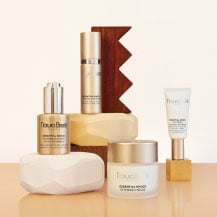 Menopause-focused care
Essential Shock
Menopause-focused care
Essential Shock
 Powered by antioxidants
C+C Vitamin
Powered by antioxidants
C+C Vitamin
 Body care meets wellness
Diamond Well-Living
Body care meets wellness
Diamond Well-Living
 Rescue for sensitive skin
NB Ceutical
Rescue for sensitive skin
NB Ceutical
 Entry-level essentials
Oxygen
Entry-level essentials
Oxygen
 Support for oily skin
Stabilizing
Support for oily skin
Stabilizing
Search here:
Connect with our Customer Service experts who are dedicated to answering your questions and helping you discover your spa-quality skincare regimen.

 Lifting without limits
Inhibit
Bestselling age-defiers
Diamond Extreme
Daily skincare staples
Diamond Cocoon
Made for dark spots
Diamond Luminous
Next-level skin science
Diamond Life Infusion
Menopause-focused care
Essential Shock
Powered by antioxidants
C+C Vitamin
Body care meets wellness
Diamond Well-Living
Rescue for sensitive skin
NB Ceutical
Entry-level essentials
Oxygen
Support for oily skin
Stabilizing
Lifting without limits
Inhibit
Bestselling age-defiers
Diamond Extreme
Daily skincare staples
Diamond Cocoon
Made for dark spots
Diamond Luminous
Next-level skin science
Diamond Life Infusion
Menopause-focused care
Essential Shock
Powered by antioxidants
C+C Vitamin
Body care meets wellness
Diamond Well-Living
Rescue for sensitive skin
NB Ceutical
Entry-level essentials
Oxygen
Support for oily skin
Stabilizing
Product added
(0 items)
Explore and choose your skincare essentials.
(0 items)
Product added
(0 items)
Explore and choose your skincare essentials.
(0 items)
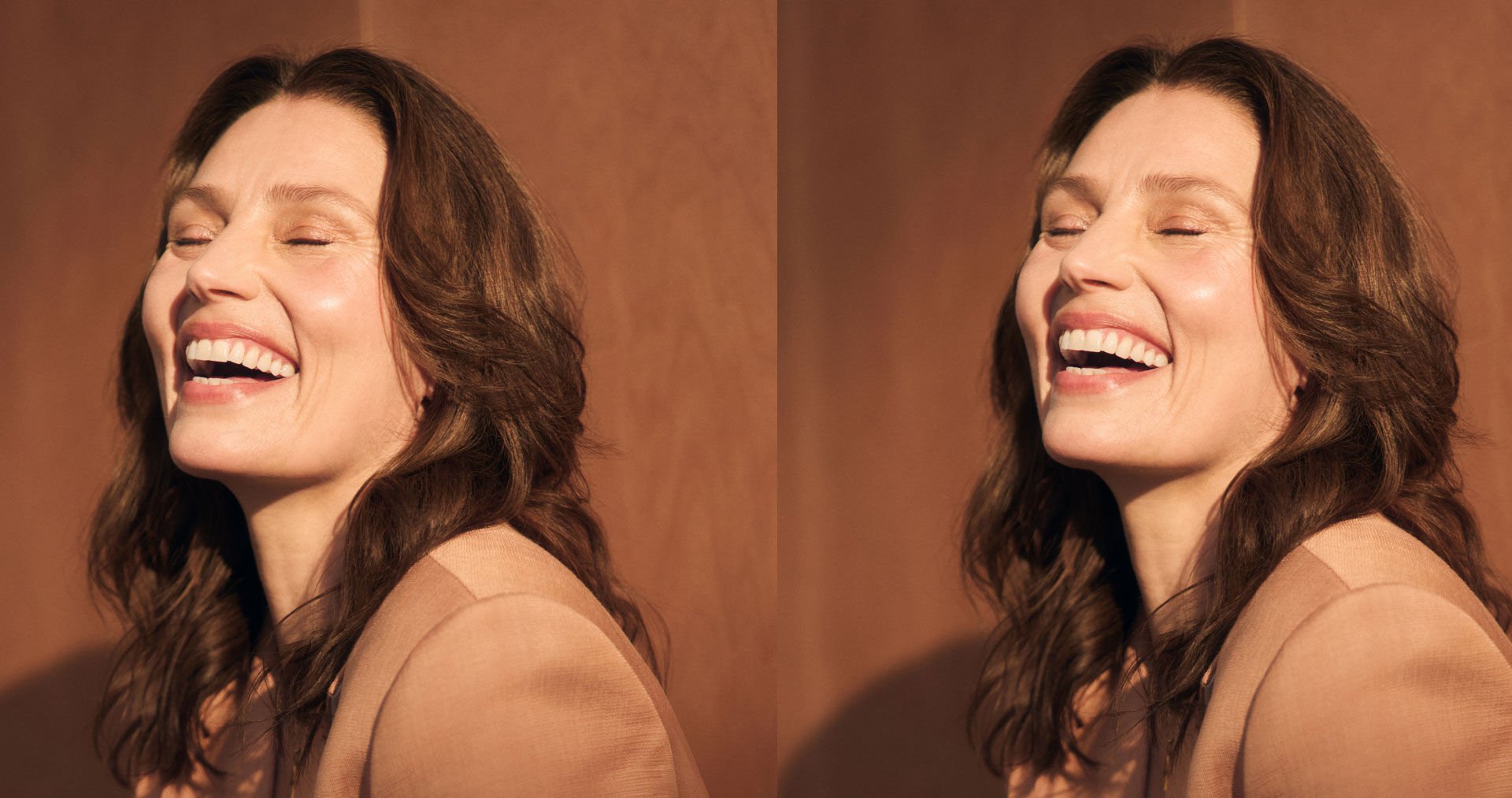
Menopause typically begins in the 40s* and marks a new stage when the skin’s needs begin to change. Hormonal shifts—particularly a decline in estrogen—affect how the skin behaves and how it responds to routines that once worked well. In this guide, we explore what happens to the skin during this transition and how to adapt your daily ritual accordingly, knowing that every woman experiences it differently.
As we approach menopause, estrogen levels begin to decline. This hormone is produced in the ovarian follicles, which gradually lose their ability to generate it over time. Beyond regulating the menstrual cycle, estrogen plays a key role in skin health and overall wellbeing:
🦴 Helps protect bone density and prevent lack of elasticity
⚖ Supports a healthy lipid profile
✨ Contributes to firmer, more hydrated and radiant skin
🧠 Influences memory and mood

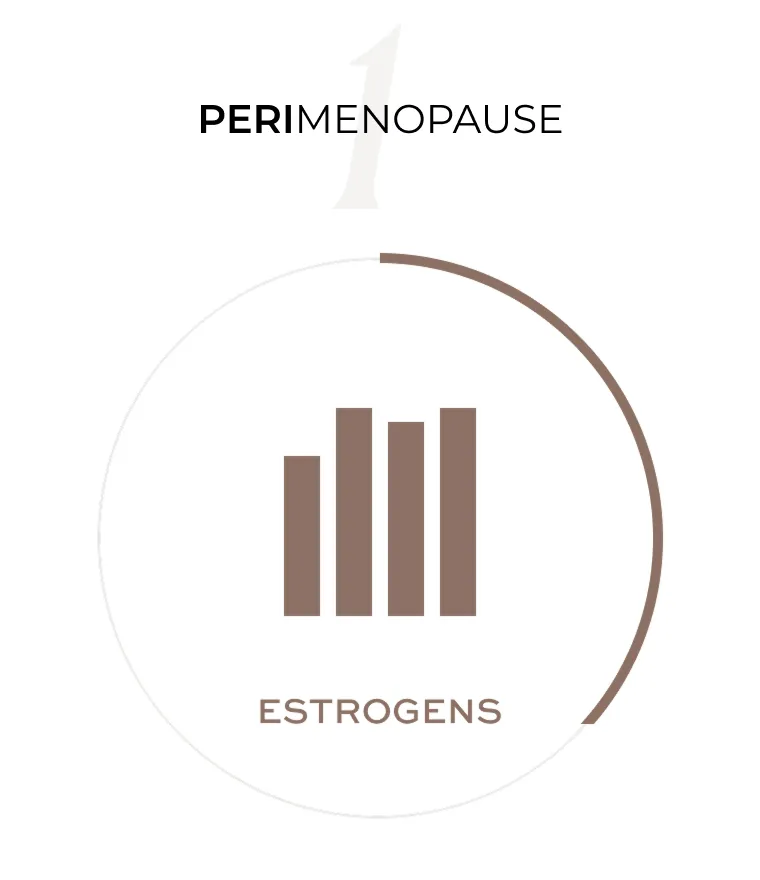
(40-50 years)*
Hormone levels begin to fluctuate. Early symptoms may appear, such as hot flashes,
irregular cycles, changes in sleep and mood, progressive bone mass loss, and cholesterol variations.
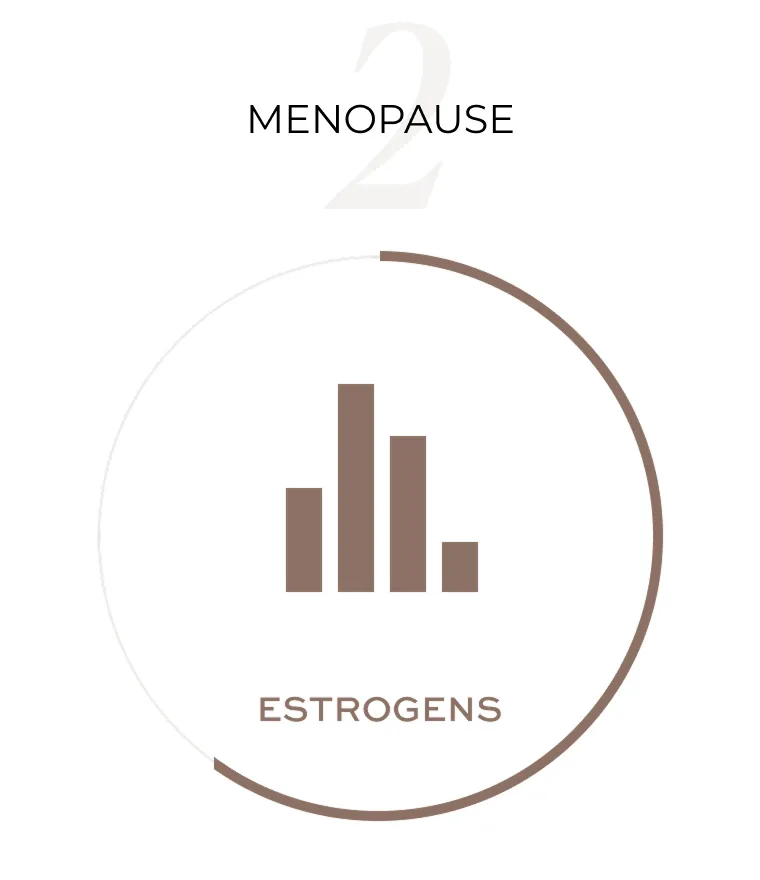
(≈50 years)*
It happens after 12 consecutive months without menstruation. The symptoms that started earlier may
persist and/or intensify: insomnia, mucousal dryness, joint pain, migraines, difficulty concentrating, or weight changes.
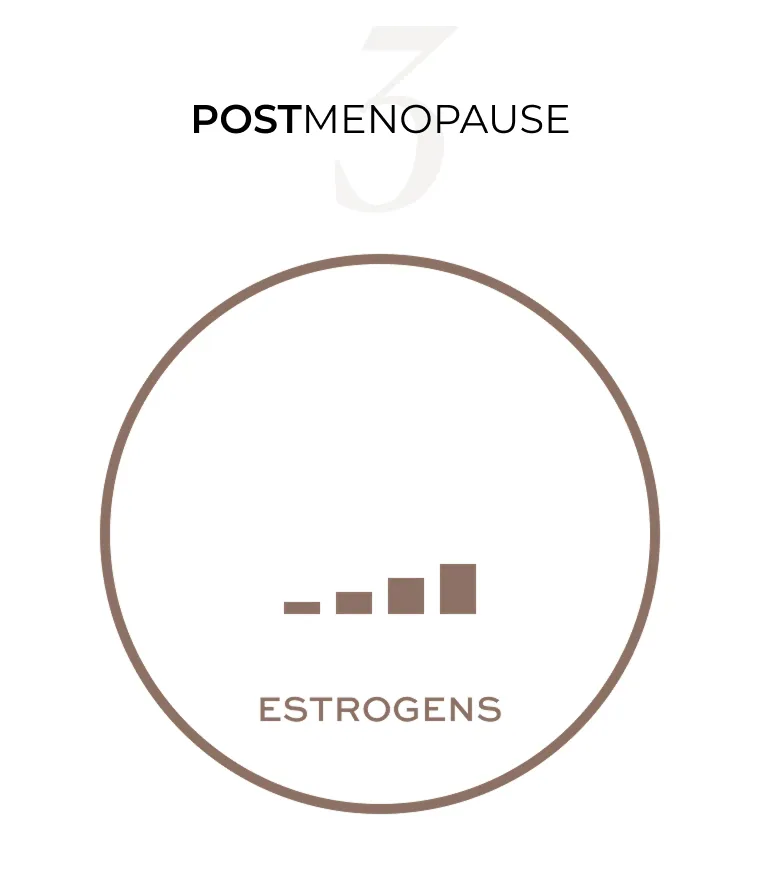
(From then on)
Hormone levels stabilize at lower ranges. Some discomforts subside, but long-term
risks such as osteoporosis and cardiovascular disease increase.

Skin relies on estrogen to stay firm, hydrated and even toned. These hormones stimulate key cells such as fibroblasts—responsible for producing collagen, elastin and hyaluronic acid—as well as melanocytes, which regulate melanin and help prevent dark spots.
As estrogen levels decline, these biological processes slow down, triggering a series of structural changes beneath the surface:
∙ Collagen in free fall: In the first five years after menopause, up to 30% of collagen can be lost,
followed by an average decline of around 2% per year over the next 15 years.
∙ The skin’s support system is at risk: Elastin and hyaluronic acid levels decrease, further weakening skin structure.
∙ Cell turnover slows down: As estrogen levels decline, cell renewal slows down, leading to a gradual loss of epidermal density of around 1.1% per year.
∙ Oxidative stress is at its peak: The drop in estrogen reduces skin’s natural antioxidant protection, increasing exposure to oxidative stress and impacting resilience and repair.
✓ More dryness: Transepidermal water loss (TEWL) rises.
✓ Loss of elasticity: As collagen, elastin and hyaluronic acid decline, skin appears less firm and supple.
✓ More wrinkles and expression lines: Especially around the eyes and lips, where skin is thinner and constantly in motion.
✓ More fragility: Reduced density and defense mechanisms make skin more vulnerable to external aggressors.
∙ More oil production: Hormonal imbalance may enlarge and overstimulate sebaceous glands, leading to breakouts and imperfections.
∙ The skin’s support system is at risk: Vascular irregularities and small veins become more visible.
∙ Dark spots and uneven skin tone: Melanin production becomes unbalanced, causing hyperpigmentation on the face, neck, and hands.
∙ Photosensitivity: Increased UV reactivity and higher risk of sun spots or sunburn.
· Use a facial cleanser for dry skin delivering extra comfort, both morning and night.
· Exfoliate your skin every few days to help remove dead skin cells and reduce the appearance of dark spots.
· Apply nourishing and firming creams daily to support skin firmness and hydration, as estrogen and collagen levels decline.
· Use sunscreen for the face every day. It’s essential to prevent aging and, during menopause, even more important to help prevent pigmentation.
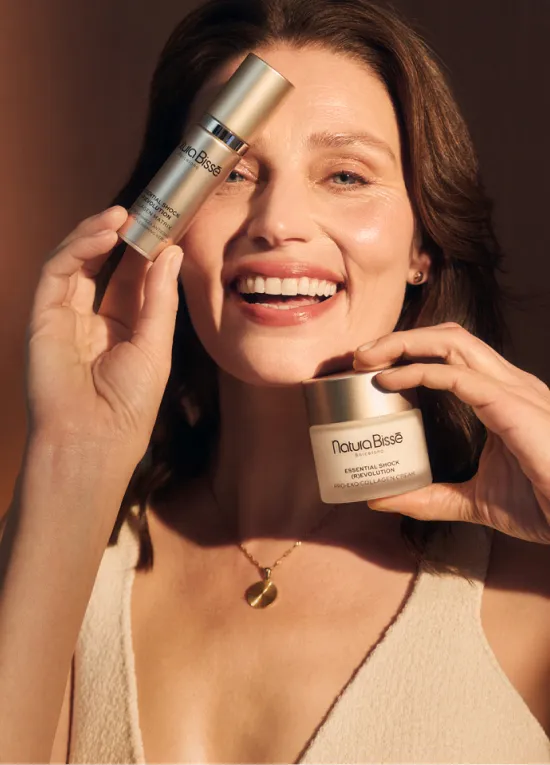
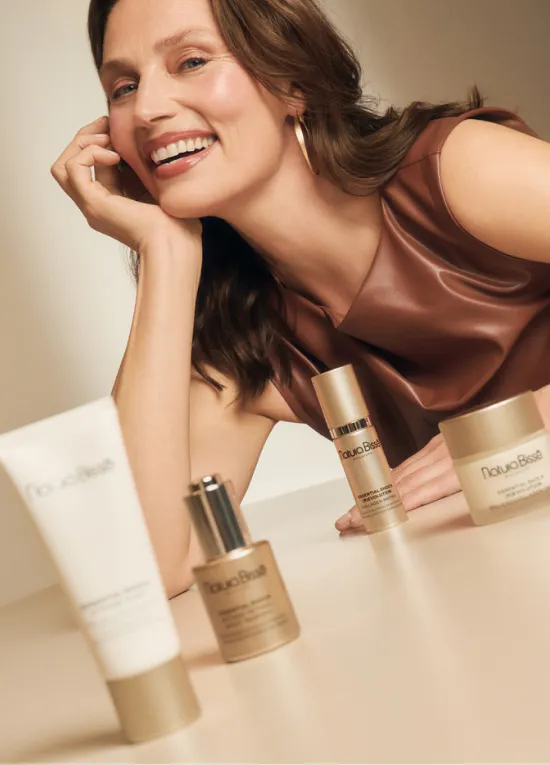
Structural proteins, such as collagen and elastin, are key building blocks that give the skin its support and firmness. Over time and with hormonal changes, their production decreases, and the skin begins show signs of losing elasticity. At Natura Bissé, we have designed Essential Shock to help maintain this essential structure and help the skin look firmer, smoother, and more comfortable.
To fully accompany you at this stage of life, we spoke to Sofía Fournier, gynecologist and women’s health expert, who gave us a few tips on how to go through menopause in the healthiest way possible.
*Note: The ages indicated are for guidance only. Perimenopause, menopause and postmenopause may occur at different times depending on individual health and biological factors.
SOURCES:
Aguilera, J. R., Ríos, P. G., & Zepeda, A. S. (2015). Calcio y vitamina D en la paciente climatérica
Perinatología y reproducción humana, 29(2), 83–87. Available in:
https://doi.org/10.1016/j.rprh.2015.01.002
Romero, C. E. (1997). Efectos cardiovasculares de los
estrógenos.
Revista Médica del Uruguay (13: 183-190).
https://www.smu.org.uy/publicaciones/rmu/1997v3/art3.pdf
Pérez, M. A., Arancibia, S. R. Acciones protectoras de los
estrógenos en el sistema nervioso central. UNAM.
http://www.ejournal.unam.mx/rfm/no49-6/RFM049000609.pdf
Honeyman, J. M. (2012). Funciones metabólicas y hormonales de la
piel. Revista Chilena de Dermatología, 28(3), 234-239.
https://www.sochiderm.org/web/revista/28_3/25.pdf
Accorsi-Neto, A., Haidar, M., Simões, R., Simões, M., Soares, J.,
Jr, & Baracat, E. (2009). Effects of isoflavones on the skin of postmenopausal women: a pilot study.
Clinics
(Sao Paulo, Brazil), 64(6), 505–510.
https://doi.org/10.1590/s1807-59322009000600004

It seems you are visiting us from . Please, go to: