














Explore our curated collections and secure your skincare selections.
Collagen is the protein that quite literally holds your skin together. It’s what gives skin its firmness, suppleness, and plump feel. As levels decline, skin becomes thinner, less dense, and begins to lose definition. And there’s a stage of life, from perimenopause to menopause, when that shift accelerates.
Want to know what collagen really is, why levels drop, and how to help preserve it? Let’s get into it.
What is collagen?
It’s the most abundant protein in the body. The one responsible for structure, support, and strength in bones, joints, and skin. Within the complexion, types I and III predominate, accounting for nearly 90% of skin collagen and playing a key role in maintaining firmness, suppleness, and volume.
What does collagen do for your skin?
Collagen acts as an internal scaffolding. Like all proteins, it’s made up of amino acids that organize into collagen fibers. These fibers form a supportive network that provides structure, cohesion, and elasticity. When levels are optimal, skin appears:
- ⋅ Firmer
- ⋅ Suppler
- ⋅ Denser
- ⋅ More resilient
As levels decline, sagging begins to appear, wrinkles become more pronounced, and volume loss grows increasingly visible.
When does collagen loss begin?
Around ages 25 to 30, natural collagen production begins to gradually decline. However, during the first five years after menopause, that loss can accelerate significantly. Skin may lose up to 30% of its collagen during this time.
Hormones and collagen: a direct relationship
Estrogen plays a key role in regulating collagen production. When levels drop:
- ⋅ Collagen production slows
- ⋅ Skin’s recovery capacity decreases
- ⋅ Dryness and tightness increase
Hormones matter significantly. But they’re not the only factor. Sun exposure, smoking, alcohol, an unbalanced diet, pollution, and chronic stress also directly affect both the quality and quantity of collagen.
How to preserve collagen in your skin and prevent loss of firmness?
Collagen naturally declines, but it can be supported. Menopause isn’t the end of firmness. It’s the beginning of a new, more intentional way to care for your skin.
Four keys to preserving its structure:
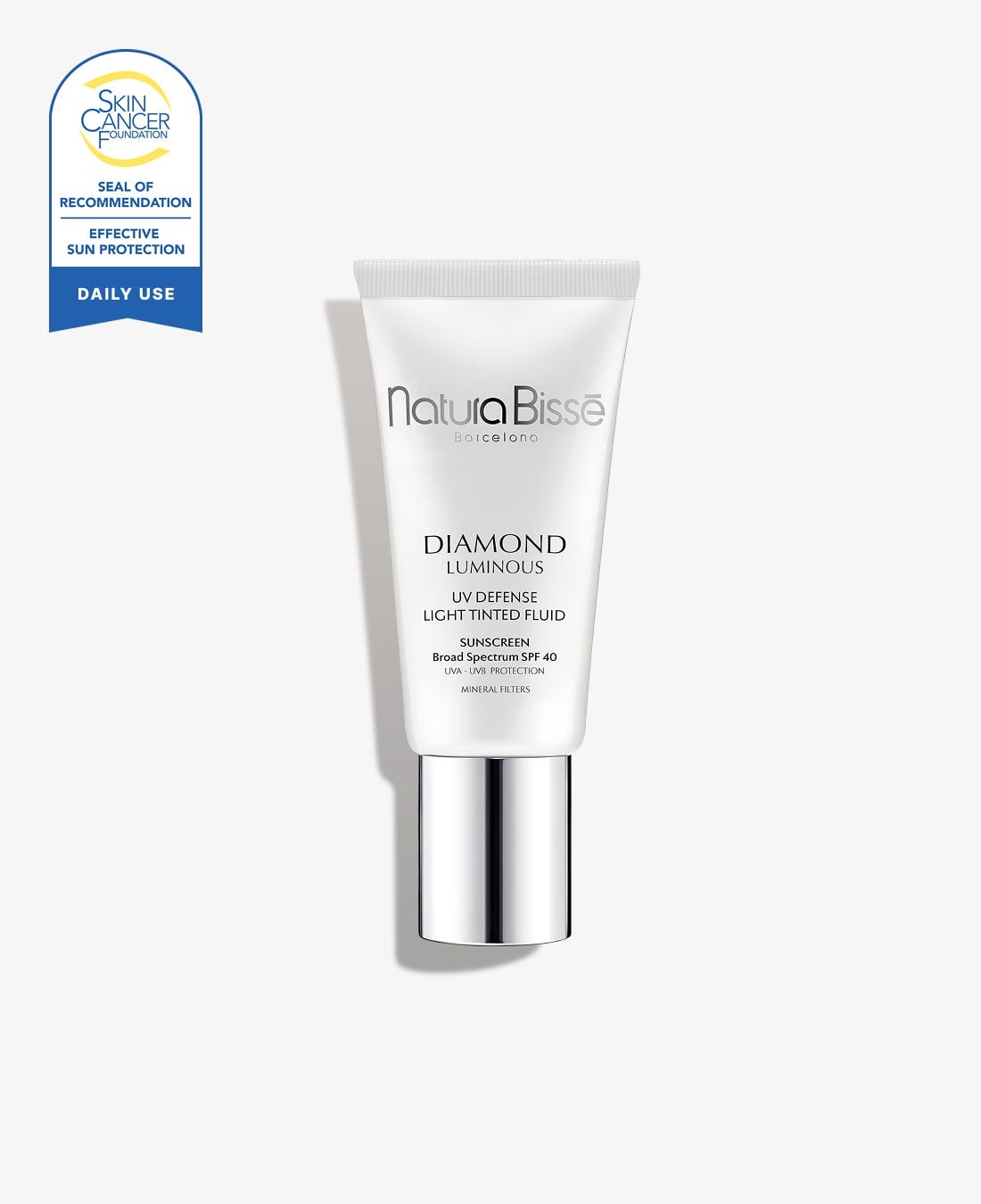
- ⋅ Daily sun protection: UV radiation promotes oxidative stress, which accelerates collagen breakdown and visible skin aging.
- ⋅ Pro-collagen ingredients: Formulas designed to support collagen levels and help maintain firmness and resilience.
- ⋅ Consistent hydration: Well-hydrated skin maintains elasticity and density more effectively.
- ⋅ Healthy habits: Quality rest, balanced nutrition, and mindful sugar intake are essential. Excess glucose promotes glycation, a process that weakens collagen fibers and accelerates their deterioration.
Signs of collagen loss in your skin
Wondering how to tell if your skin is losing collagen? Look for:
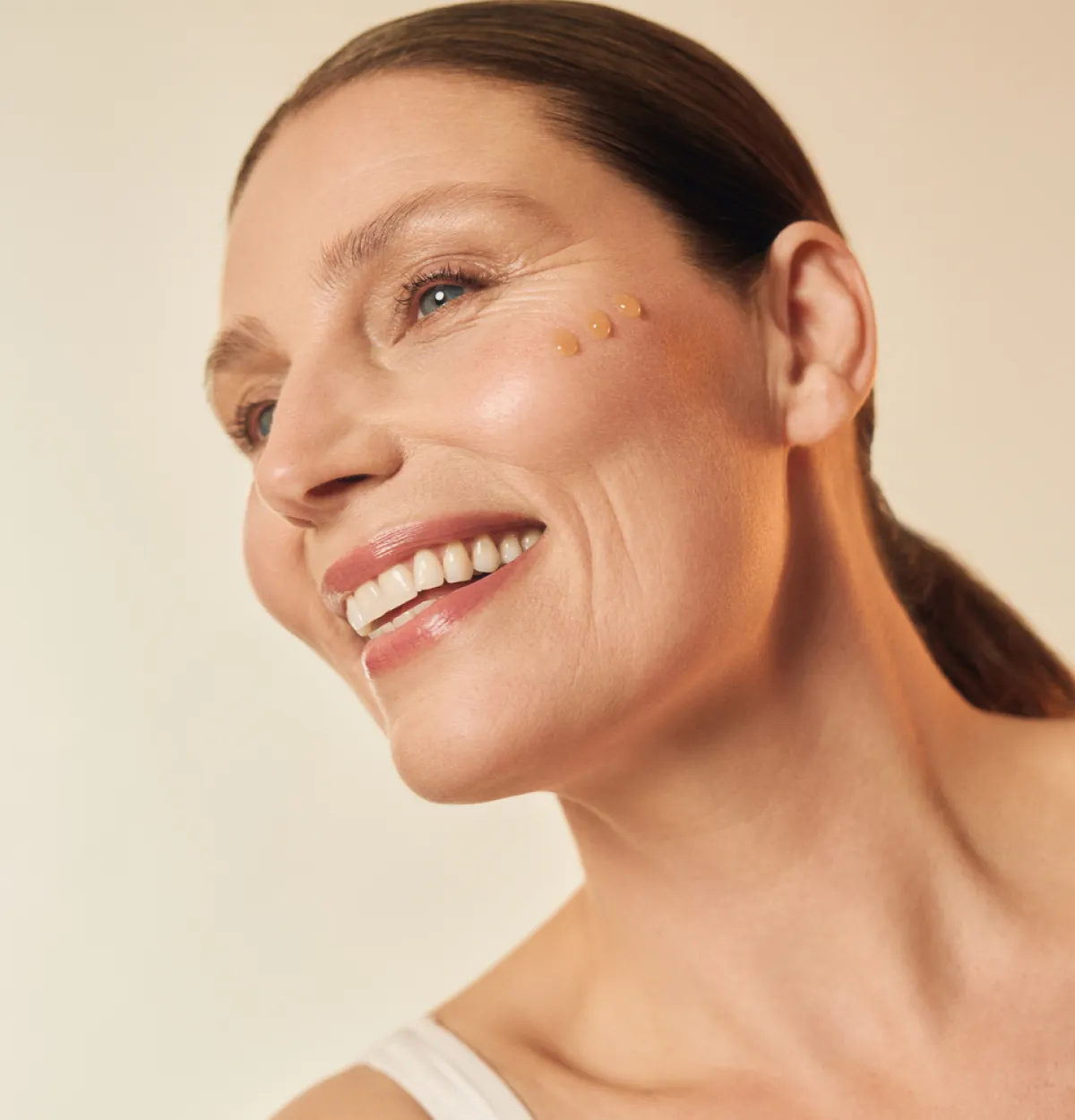
- ⋅ Volume loss in the cheeks
- ⋅ Sagging along the neck and jawline
- ⋅ Thinner, less resilient skin
Understanding how collagen changes is the first step. Supporting it is the next.
BOOST YOUR COLLAGEN
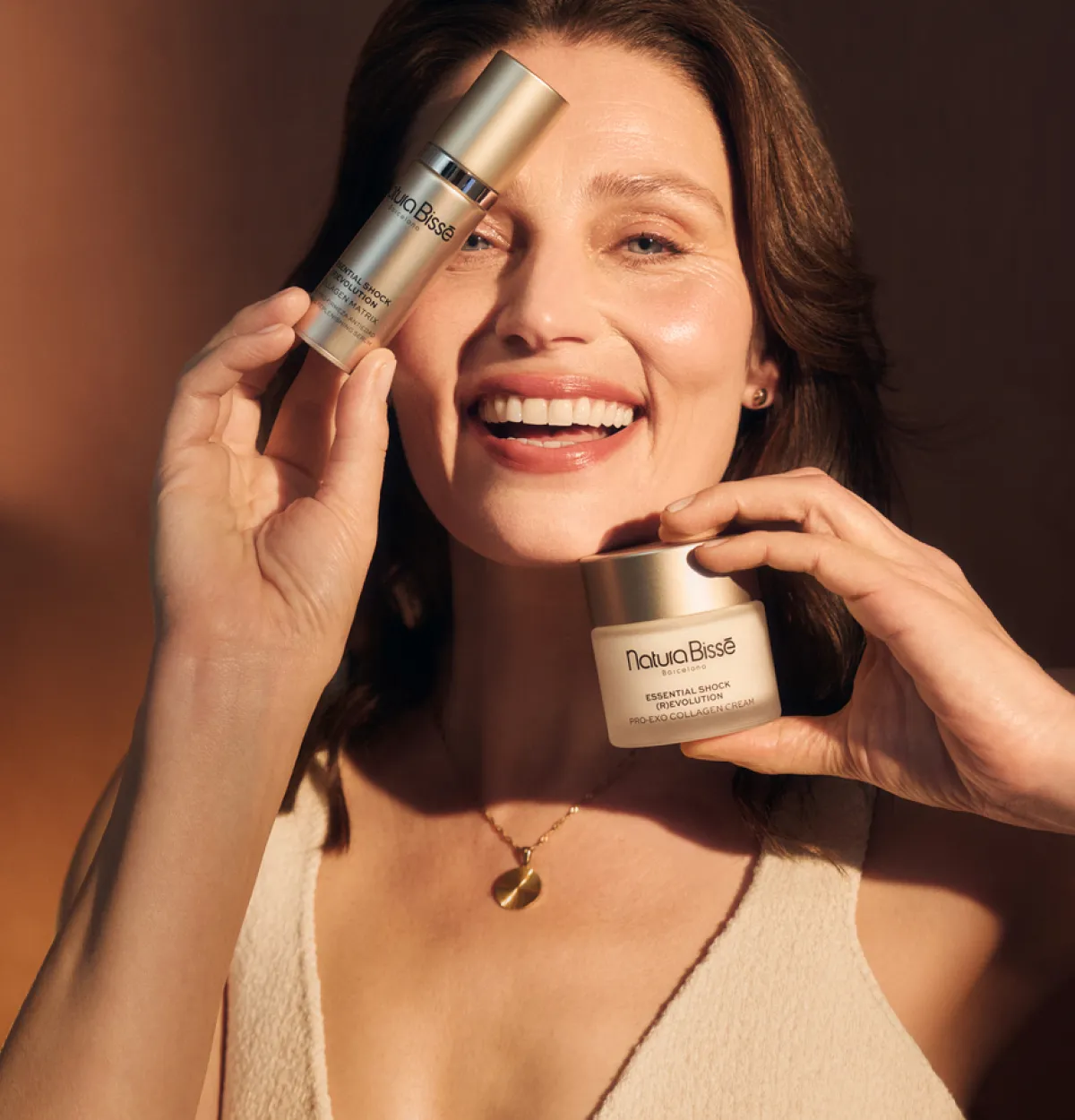
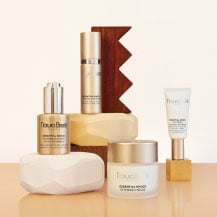
Since 1979, Natura Bissé has led the way in collagen-focused firmness. We were pioneers, introducing an innovation that marked the origin of our iconic Essential Shock Line. Today, our pro-collagen collection features next-generation ingredients designed to support skin through key stages such as perimenopause and menopause.
FIRMER SKIN STARTS HEREWhat happens to your skin during menopause?
Menopause doesn’t only affect collagen. Hormonal shifts, increased dryness, loss of density, and barrier alterations all contribute to a profound skin transformation. If you want to understand what’s really happening, and how to adapt your routine to this new stage of life, keep reading.
LEARN MORE
Sources
⋅ Baumann L. Skin ageing and its treatment. J Pathol. 2007 Jan;211(2):241-51. doi: 10.1002/path.2098. PMID: 17200942.
⋅ Fisher GJ, Kang S, Varani J, Bata-Csorgo Z, Wan Y, Datta S, Voorhees JJ. Mechanisms of photoaging and chronological skin aging. Arch Dermatol. 2002 Nov;138(11):1462-70. doi: 10.1001/archderm.138.11.1462. PMID: 12437452.
⋅ Kamp E, Ashraf M, Musbahi E, DeGiovanni C. Menopause, skin and common dermatoses. Part 2: skin disorders. Clin Exp Dermatol. 2022 Dec;47(12):2117-2122. doi: 10.1111/ced.15308. Epub 2022 Oct 26. PMID: 35727900; PMCID: PMC10092853.
⋅ Krutmann J, Bouloc A, Sore G, Bernard BA, Passeron T. The skin aging exposome. J Dermatol Sci. 2017 Mar;85(3):152-161. doi: 10.1016/j.jdermsci.2016.09.015. Epub 2016 Sep 28. PMID: 27720464.
⋅ Morita A. Tobacco smoke causes premature skin aging. J Dermatol Sci. 2007 Dec;48(3):169-75. doi: 10.1016/j.jdermsci.2007.06.015. Epub 2007 Oct 24. PMID: 17951030.
⋅ Ricard-Blum S. The collagen family. Cold Spring Harb Perspect Biol. 2011 Jan 1;3(1):a004978. doi: 10.1101/cshperspect.a004978. PMID: 21421911; PMCID: PMC3003457.
⋅ Shoulders MD, Raines RT. Collagen structure and stability. Annu Rev Biochem. 2009;78:929-58. doi: 10.1146/annurev.biochem.77.032207.120833. PMID: 19344236; PMCID: PMC2846778.
⋅ Shuster S, Black MM, McVitie E. The influence of age and sex on skin thickness, skin collagen and density. Br J Dermatol. 1975 Dec;93(6):639-43. doi: 10.1111/j.1365-2133.1975.tb05113.x. PMID: 1220811.
⋅ Thornton MJ. Estrogens and aging skin. Dermatoendocrinol. 2013.
⋅ Uitto J. Understanding premature skin aging. N Engl J Med. 1997 Nov 13;337(20):1463-5. doi: 10.1056/NEJM199711133372011. PMID: 9358147.